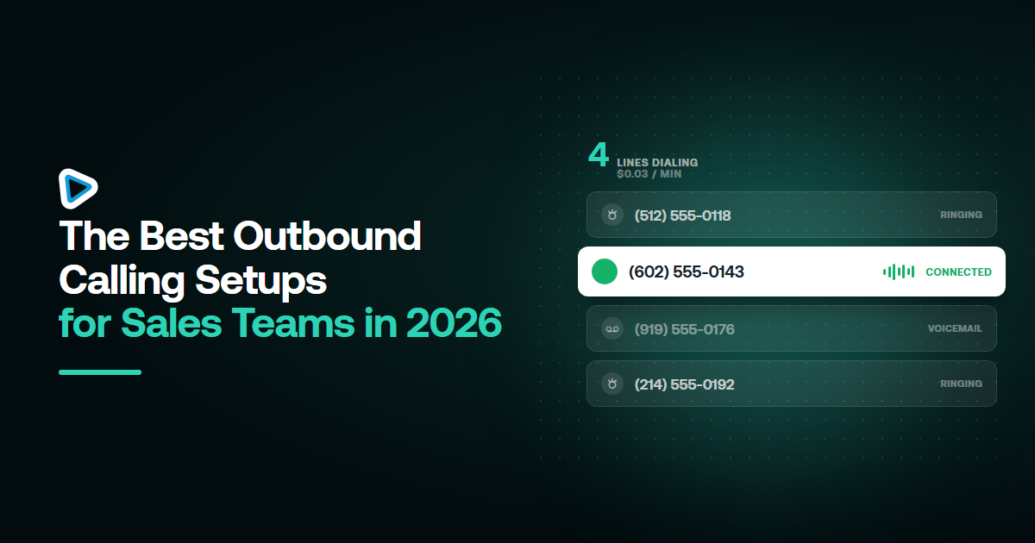
An outbound calling setup comes down to one number: how many lines each rep dials at the same time. Everything else – the platform, the integrations, the reporting – matters, but the line count is what decides how many conversations a day your team can physically have, and what those conversations cost you.
This is a sizing guide rather than a vendor shootout. If you want platforms compared, we did that in the click-to-call platform comparison. Here we look at how many lines to run, what the stack actually costs per seat, why connect rates fall, and where AI agents earn their place.
What outbound teams actually need
Three things, in this order of impact. A list worth calling, which no platform can give you. Numbers that arrive looking legitimate. And enough throughput that reps spend their day talking rather than waiting.
Most teams shop for the third and ignore the second, which is why a team can double its dial volume and see the same number of conversations. Volume multiplies whatever your connect rate already is. If that rate is poor because your numbers look like spam, four lines gets you four times the ignored calls.
Single line or multi-line: how to size it
In smrtDialer, single line dials one number at a time. Multi-line dials up to four simultaneously, and the rep decides how many are live – four, three, two, or one. Campaign setup is identical between them; the only difference is simultaneous calls.
The rule of thumb: stay on one line while the rep is the bottleneck, move up when the dialer is. A rep doing research between calls, or handling conversations that need their full attention, will not benefit from four lines – they will benefit from better records. A rep working a 500-row list where four in five numbers will not answer is sitting idle on one line.
Multi-line has a real cost beyond the seat price. Dial four numbers and two may answer, so one gets dropped. Do that at scale from the same set of numbers and you degrade those numbers’ reputation – which is why being able to turn the line count down matters as much as being able to turn it up.
What an outbound seat actually costs
Three components, and only one of them is on the pricing page you land on first.
- The dialer seat. Single Line is $50 per seat per month ($42 billed yearly), Multi Line $90 ($75), Business $150 ($125).
- A smrtPhone seat underneath it. smrtDialer requires an active smrtPhone subscription, from $29 per seat. So a single-line outbound rep starts around $79 per seat per month, not $50. We would rather you plan with that number than find it at checkout.
- Talk minutes. Billed at $0.03 a minute from account credit. The Business plan includes 5,000 US and Canada minutes; the others are pay-as-you-go. At real outbound volume this is not a rounding error – model it.
Two reasons to work this out before you buy. Per-minute billing means a productive month costs more than a quiet one, which is the right way round but needs budgeting for. And the plan that includes minutes only pays for itself above a certain volume – below it you are pre-buying minutes you will not talk.
Why connect rates fall, and what moves them
Assume your calls are being judged before anyone decides whether to answer. Carriers increasingly label unfamiliar numbers, and once a number is labeled, dial volume works against you rather than for you.
Two things move the needle, and neither is dial speed. Register your caller identity, so your business name travels with the call instead of a bare string of digits. And match the number you dial from to the region you are dialing into, so the call reads as local rather than as a national campaign. Neither rescues a bad list – and this is the part vendors gloss over: no dialing setup can.
The third lever is answer detection. smrtDialer includes AI voice detection, which distinguishes a person from voicemail so reps are handed live conversations rather than answering machines. That does not raise your connect rate, but it raises the share of a rep’s day spent talking to people.
Compliance is a setup decision, not a review
The mistake is treating this as something to audit later. It shapes how you set the team up on day one, and retrofitting it onto a live campaign is the expensive version.
Three things to settle with your counsel before the first call, none of which we can answer for you. Whether recording requires consent from everyone on the call, which varies by state and is why many multi-state teams simply announce recording every time. How you scrub against do-not-call lists, and how often. And who on the team is allowed to add a number to a campaign, because consent is a property of the record, not of the dialer.
This is directional, not legal advice – take it to someone qualified. The point is only that these are setup questions, and they are cheaper answered before rollout.
Where AI agents fit in outbound
Not as a replacement for reps. The honest framing is a split by conversation type: AI agents take the attempts nobody gets to, and reps take the conversations where the deal is decided.
The attempts nobody gets to are a real and large category – the after-hours callback, the fourth follow-up, the form fill that arrived at 11pm and will be cold by nine. Handing those to an agent tends to get more out of the reps you have rather than letting you employ fewer, because it removes the low-value attempts from their day rather than the conversations.
Matching the setup to your team
A rough map. One to three reps doing considered follow-up: single line, and spend the difference on caller-ID registration and list quality. Four or more reps working volume lists: multi-line, with the line count turned down when the list is answering. High volume with predictable monthly minutes: the Business plan, once you have measured enough months to know the included minutes are worth pre-buying.
Whichever way you size it, the calls have to land on the CRM record without anyone typing them up, or your pipeline data will quietly stop matching reality. If you want to see the throughput side of that, smrtDialer plans start at $50 a seat and include a 14-day trial.